
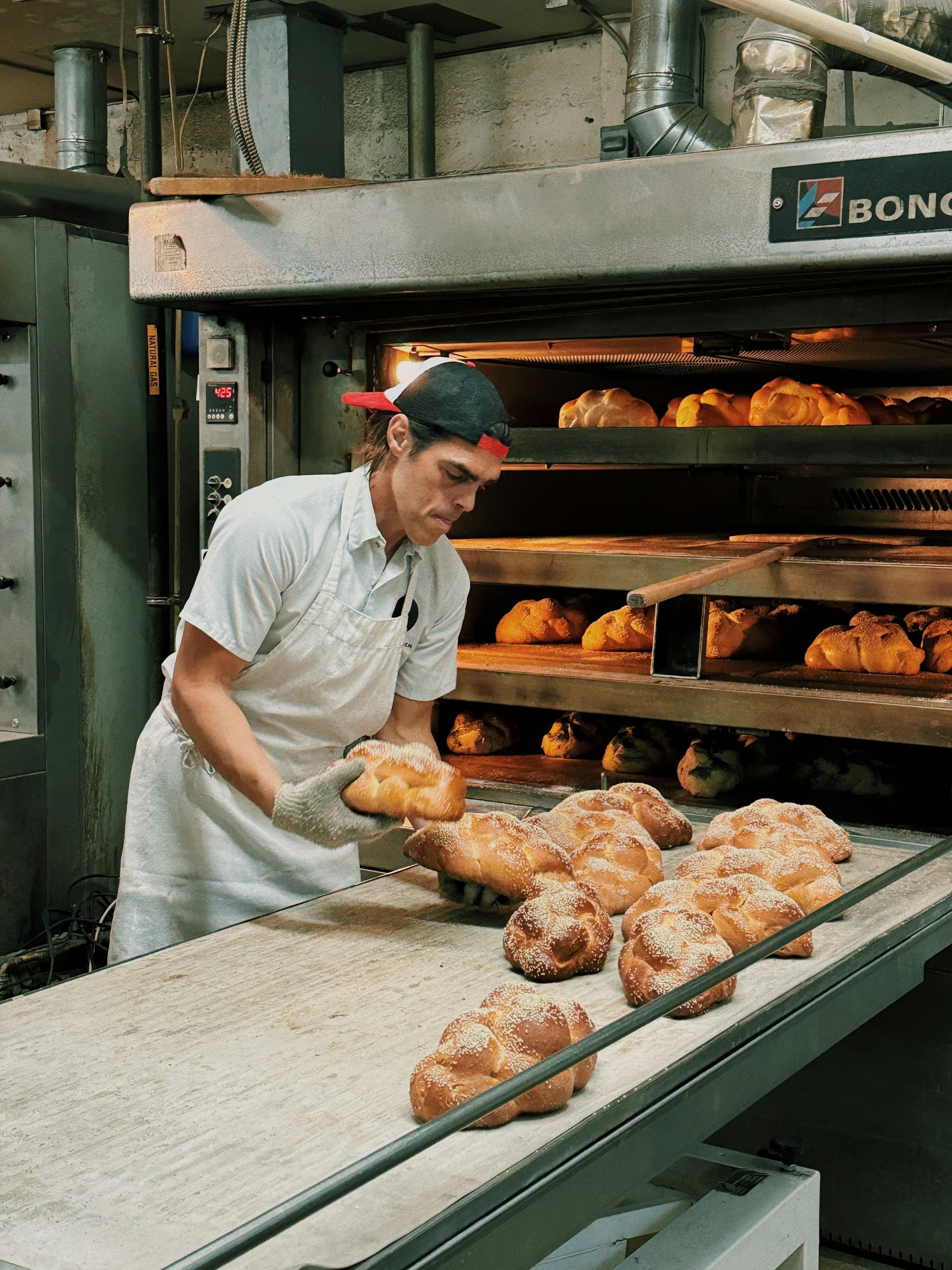
Technological innovation is redefining the baking industry, from development and ingredient selection to production, quality control and packaging.
What baking trends are defining this new era? Here’s what we’ve noticed:
1. Automation and Smart Manufacturing
Automation is now essential.
Key components include:
· AI-controlled smart ovens
· Robotic functions such as dough mixing
· Real-time monitoring
· Fully integrated production lines from raw ingredients to production and packaging
Automated systems depend on accurate data.
C-Cell baking analyser assesses crumb structure to provide data on texture, cell size, crust colour and uniformity.
Inconsistencies can be adjusted immediately without compromising on quality or impacting production time.
2. Clean Label and Formulation Innovation
Health-conscious consumers expect quality ingredients, while government regulations also require clear labelling.
Key areas:
· Transparent labelling of allergens
· Folic acid fortification – mandatory for non-wholemeal bread
· Wheatgerm bread must contain at least 10% of processed wheatgerm
· Cream must be dairy. Artificial cream should be clearly labelled
The C-Cell analyser is vital for assessing how ingredient substitutions alter crumb structure.
Alternative components, like different proteins, can be reformulated using precision data, thus maintaining quality and taste.
3. Supply Chain Resilience
Unusual weather patterns, logistical challenges, and geopolitical conflicts cause serious disruption to supply chains and production processes – prompting bakeries to identify alternative suppliers and ingredients to maintain quality and minimise production downtime.
Tools such as C-Cell establish a consistent baseline against which new formulations can be measured and adjusted accordingly.
· A baking analyser assesses alternative formulations against existing ones
· This ensures key metrics are maintained – taste, quality, consistency, cost, and timescales, for example
Adjustments can be made before committing to full production.
C-Cell allows bakeries to swiftly respond to these new baking trends to ensure substitute ingredients provide the familiar product and quality.
4. Sustainability and Regenerative Resourcing
Environmental concerns and sustainability issues are central to business operations.
Bakeries can reduce costs and decrease their environmental impact by using the latest technology.
· Energy-efficient ovens, monitored by AI, reduce energy consumption
· Precise formulations reduce food and water waste
· Bakeries use ethical suppliers and traceable supply chains to ensure the sustainability and authenticity of raw ingredients
Analysis of microstructure data reduces the environmental impact of production while maintaining quality.
5. Personalised, Premium and Functional Baked Goods
Consumers have precise requirements.
For some, premium or unique, artisanal products are important. For others, affordability with reasonable quality is essential.
Functional ingredients are essential – high fibre, protein-rich, low GI, and low carb options, for example.
Flexible systems allow bakeries to customise production to accommodate variable consumer requirements.
6. AI and Digital Twins
This technology is revolutionising research and development.
· The effects of ingredient changes can be predicted prior to physical trials
· Production processes can be amended for precise formulation and timing
· Overall quality is assessed and adjusted using variable data inputs
C-Cell provides a detailed analysis of crumb structure, which allows digital twin systems to accurately and quickly predict quality.
7. E-Commerce and Direct-to-Consumer Models
Online shopping, subscription models and last-minute ordering are now commonplace.
Packaging, shelf life and quality assurance must adapt accordingly, while customers must be confident in the suitability and quality of the product even though they can’t see it before purchase.
Baking analysis tools ensure production can be adjusted to meet varying consumer demand.
They also maintain product quality and consistency, and this means satisfied customers and repeat business.
8. Workforce Development
Future bakers will need traditional knowledge and technical expertise. Personnel must understand digital systems, so ongoing training is essential.
Baking analysis tools like C-Cell are easy to learn and intuitive to operate.
New staff can learn quickly and benefit from the expertise of experienced bakers, as it’s retained in a teachable, digital system.
9. Consumer Preferences and Health
Baking trends and consumer health considerations go together.
The need to monitor sugar and salt levels, fibre and fat content is vital.
However, the necessary reformulations alter product structure, texture and taste.
C-Cell analysis highlights these changes, allowing development teams to adjust ingredient ratios. This maintains crumb structure and product consistency.
10. Packaging and Waste Reduction
Packaging must be functional to maintain shelf life and avoid damage, but materials must be recyclable and sustainable.
Bakers are redesigning packaging to accommodate these requirements.
However, one effective way of reducing waste is to ensure product quality.
C-Cell analysis prevents substandard products from reaching the production line which minimises waste.
Discover how C-Cell can keep you up to date with the latest baking trends.